
What Does It Mean When a Cat Sleeps With Its Back to Its Owner?
Cats have an impressive ability to make ordinary sleeping positions look mysterious. One night your cat curls against your chest, another night it chooses the foot of the bed, and sometimes it settles directly beside you only to turn around and present you with its back.
From a human perspective, turning away can look dismissive. In feline body language, however, the interpretation can be almost the opposite. A cat willing to sleep while facing away from someone may be demonstrating that it feels sufficiently secure not to watch that person constantly. The position can also reflect comfort, temperature, habit, and the simple fact that cats have very particular ideas about where and how they want to sleep.
Your Cat May Simply Be Choosing the Most Comfortable Position
Before assigning an emotional meaning to the direction your cat is facing, consider the physical environment. Cats continually make small decisions about warmth, airflow, surface texture, light, noise, and how easily they can move away from a resting place.
Humans manage those same conditions much more deliberately by adjusting thermostats, opening windows, adding blankets, or even installing features that make indoor temperatures easier to control. The emphasis on creating comfortable living environments extends to premiumsaunas.com, where home wellness spaces are designed around heat and relaxation, while a cat simply rotates, stretches, curls up, or relocates until the immediate conditions feel right. What looks like your pet intentionally turning away from you may therefore be nothing more dramatic than finding the best sleeping angle.
Watch whether the position changes with the season. A cat may press closely against you when the room is colder but create a little more distance during warmer weather. Where blankets, pillows, windows, heating vents, and doors are located can also influence which direction feels most comfortable.
Turning Away Can Actually Indicate Trust
Sleeping makes an animal less prepared to respond immediately to what is happening around it. Cats therefore tend to choose resting places where they feel reasonably secure.
When your cat settles beside you and turns its back toward you, it may indicate that it does not consider you something that requires monitoring. Rather than keeping its eyes pointed in your direction, the cat is comfortable allowing you to remain outside its immediate field of vision.
That interpretation becomes stronger when the rest of the cat’s body appears relaxed. Loose posture, comfortable stretching, calm breathing, kneading before settling down, or remaining deeply asleep when you move slightly can all suggest that the animal feels secure.
Look at the relationship as a whole rather than using one sleeping position as a personality test. If your cat regularly approaches you, rubs against you, rests nearby, plays comfortably, or seeks interaction, turning its back during a nap is unlikely to represent rejection.
In fact, choosing to sleep beside you in the first place may be more informative than which direction the cat happens to face.
Your Cat Might Be Watching the Rest of the Room
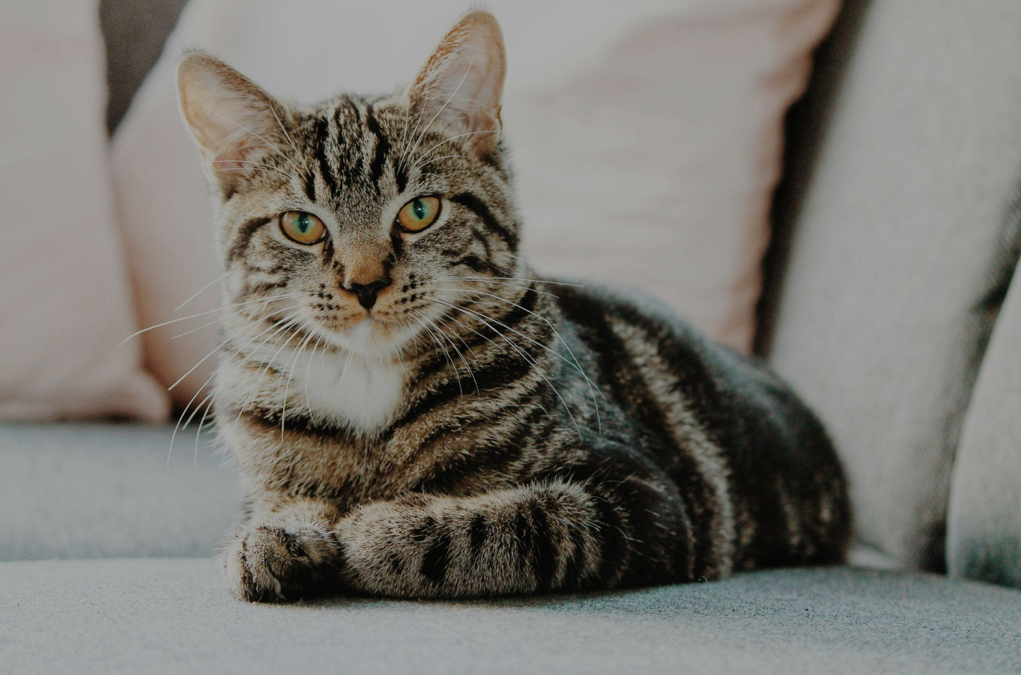
Photo by Erik-Jan Leusink on Unsplash
There is another practical explanation: you may not be the thing your cat wants to watch.
If the cat already feels safe beside you, facing outward gives it a better view of everything else. A bedroom door, hallway, window, another pet, or frequently used part of the house may be more interesting than staring at its sleeping owner.
Cats retain instincts that encourage awareness of their surroundings even in comfortable homes. A resting position can allow them to relax while remaining capable of noticing movement or sound elsewhere.
Observe where the cat points its head. If it repeatedly sleeps with its back toward you but faces the bedroom entrance, the behavior may have more to do with the doorway than with you. The same applies when another animal lives in the house or activity regularly occurs in a particular direction.
This can explain an apparently contradictory behavior: the cat chooses your immediate vicinity because it feels safe there while positioning itself so it can monitor the less predictable part of the environment.
Personal Space Does Not Mean a Weak Bond
Cats vary enormously in how much physical contact they enjoy. One may happily sleep across a person’s chest, while another prefers being 12 inches away. Both animals can have strong relationships with their owners.
A cat that sleeps beside you with its back turned may have found its preferred compromise: closeness without constant face-to-face contact. Your body provides familiarity and companionship, but the cat retains its own comfortable sleeping space.
That preference should generally be respected. Pulling a sleeping cat closer every time it creates distance can make the resting place less appealing. Allowing the cat to choose how much contact it wants gives it control over the interaction.
This is particularly important with a new or naturally cautious cat. Trust can develop gradually, and voluntary proximity is meaningful even when the animal is not ready to become a permanent lap cat.
Pay attention to changes over time. A cat that initially sleeps across the room may eventually choose the end of the bed, then move beside you. Those decisions can reveal increasing comfort more clearly than whether its face happens to be pointed toward yours.
Look for Changes Rather Than One Particular Position
A familiar sleeping position usually tells you less than a sudden change in sleeping behavior.
If your cat has always slept with its back toward you and otherwise behaves normally, there is generally little reason to treat the position itself as concerning. Cats develop favorite locations and postures just as people do.
A noticeable change deserves more attention. A cat that suddenly stops sleeping in its usual places, hides much more frequently, becomes unusually restless, sleeps substantially more than normal, avoids jumping onto familiar furniture, or shows changes in appetite, grooming, movement, or social behavior may be communicating something beyond a preference for a new sleeping position.
Context is therefore essential. Do not try to interpret one isolated piece of body language while ignoring everything else the cat is doing.
When a relaxed cat voluntarily settles beside its owner and then turns around, the message is often much more positive than it appears. The animal has chosen to remain close while putting itself in a position where it cannot continuously watch you.
So the next time your cat falls asleep with its back toward you, there is no need to take the apparent snub personally. Your cat may simply be comfortable, watching the room, enjoying a little personal space, or trusting you enough to stop keeping an eye on you.