How Often Should You Actually Inspect Your Commercial Roof
Sixty percent of commercial roof failures trace back to poor maintenance, not poor materials. That number still surprises most building owners I talk to. They assume a strong membrane and good flashing mean years of silence overhead. Then a ceiling stain shows up on a Tuesday morning, and the phone calls start. The honest answer to the inspection question is simple: at least twice a year, plus after any severe storm. But the real answer has more texture than that.
This guide walks through the exact cadence, the seasonal triggers, and the signs your roof is telling you something before it leaks. You will know what to check yourself and what to pay a professional for. And you will understand why the cheapest roof inspection in town can end up costing you the most money.
Why the Twice a Year Baseline Makes Sense
Your roof operates in two brutal seasons. Summer bakes the membrane with UV radiation, and winter drives water into every microscopic gap through freeze thaw cycles. A spring inspection catches the winter damage. A fall inspection preps the roof for the cold months ahead. That rhythm catches most problems while they are still cheap to fix.
The math supports this. The Occupational Safety and Health Administration reported in 2023 that nearly a quarter of all falls on commercial properties involve workers accessing roofs, which is a strong reminder that an unmaintained roof forces you into more dangerous trips up top. Fewer visits, but smarter ones, keeps people safer and the building drier.
Here is the part most owners skip: the twice a year rule only works if the inspection is systematic. Wandering around looking for obvious holes is not an inspection. You need a checklist that covers drains, flashing, membrane seams, penetrations, and the condition of the parapet wall.
Storm Season Changes Everything
Kansas weather does not respect your calendar. A June hailstorm can deposit enough energy on your roof to compromise the granule layer, and the damage does not always show as a visible puncture. Sometimes it shows as accelerated wear six months later.
The Environmental Protection Agency noted in 2022 that stormwater runoff from commercial buildings carries pollutants picked up from deteriorating roofing materials, which means your roof does not just protect your building. It also affects the surrounding environment. A cracked membrane contributed to that runoff in ways most owners never consider.
So the rule becomes: inspect within 48 hours after any storm with hail, winds above 50 miles per hour, or heavy rain. That quick walkthrough catches the obvious stuff. Then schedule the full professional inspection within two weeks, because some damage, like granule loss, takes time to reveal itself.
What Your Own Walkthrough Should Cover
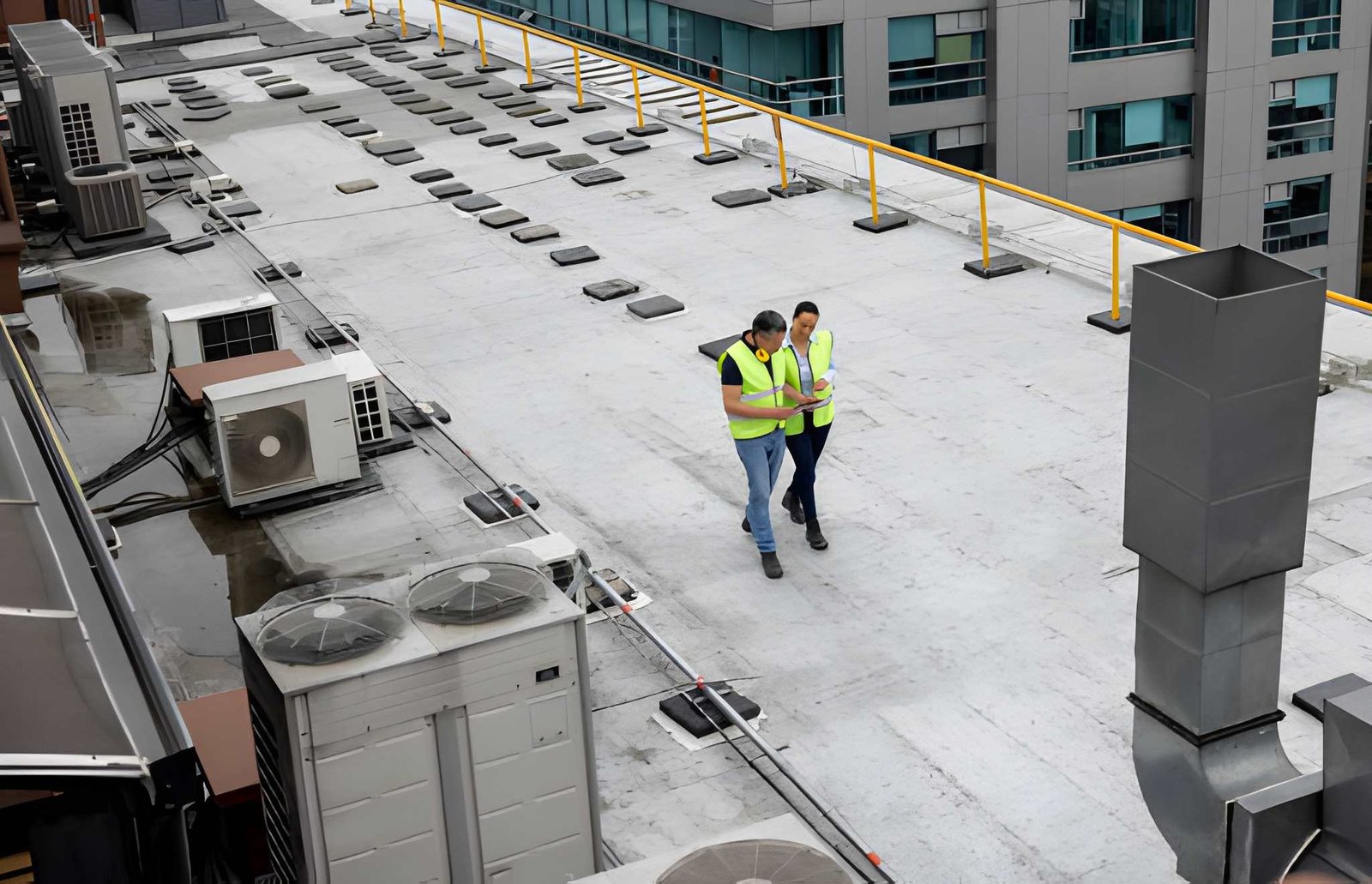
You do not need to be a roofer to spot the obvious. Walk the perimeter of the building and look up. Check for loose flashing, gaps at the edges, and visible ponding water that has not drained within 48 hours. Ponding water is the silent killer of commercial roofs.
Inside the building, look for discoloration on ceiling tiles, musty smells near HVAC units, and stains on interior walls near the roofline. These show up weeks before the actual leak does in many cases. Catching them early saves you from the drywall work that follows.
What a Professional Inspection Actually Costs vs. What It Saves
A professional commercial roof inspection runs anywhere from a few hundred dollars to over a thousand for large facilities. That feels like an expense line you want to cut. Compare it to the alternative: a full roof replacement on a 20,000 square foot building runs into six figures.
The General Services Administration published guidance in 2021 stating that routine preventive maintenance extends roof service life by up to 50 percent on federal buildings. The same logic applies to yours. A $500 inspection that catches a failing seam is the best trade you will make all year.
Here is my honest opinion: never hire an inspector who also sells roof replacements. You want someone who makes money finding problems, not someone incentivized to invent them. Companies that focus only on commercial roofing in Wichita, KS, and similar markets often separate their inspection and repair teams, which keeps the advice honest. Look for that separation when you vet a contractor.
The Checklist You Can Steal
Print this and keep it with your building maintenance binder. It covers the five zones that account for most commercial roof failures.
| Zone | What to Check | Red Flags |
| Membrane | Seams, blisters, granule loss | Cracking, exposed fabric, widespread granule piles in gutters |
| Flashing | Metal at edges, penetrations, parapet walls | Lifted edges, rust, gaps between flashing and wall |
| Drainage | Scuppers, gutters, interior drains | Standing water, debris buildup, clogged strainers |
| Penetrations | HVAC curbs, pipes, skylights | Deteriorated sealant, rusted metal, gaps at the base |
| Interior signs | Ceiling tiles, insulation, walls | Discoloration, sagging tiles, musty odor |
Run through this twice a year and after every major storm. It takes twenty minutes and requires no special skills. The professional inspector handles the rest.
The Seasonal Inspection Schedule Worth Setting Up
Put these on your calendar and treat them like payroll. They are that important.
Late March or early April works best for the spring pass. Winter ice and snow push water into places it never goes during dry months, so the damage is fresh and visible. Look hard at flashing and any area where snow piled up against the parapet.
Late September or early October works for the fall pass. This one preps the roof for freeze thaw cycles and heavy rain. Clean all drains, verify every seam is sealed, and fix minor issues before cold weather makes repairs harder and more expensive.
Add a third pass in the dead of winter if your building is older than fifteen years or has had previous leak issues. The cost is low, and the early warning is worth it.
Signs Your Roof Is Failing Right Now
Some signals demand immediate action, not a scheduled visit. If you notice any of these, call a professional that week.
Visible sagging in the membrane means trapped moisture has started rotting the deck below. That is not an inspection problem anymore, it is a repair problem. Cracking in the flashing that you can see from the ground means water is already finding its way in. And if your energy bills have crept up for two straight quarters with no change in usage, check the roof. Wet insulation loses its R value dramatically.
One building owner I worked with ignored a small blister for a year. By the time he called, the moisture had traveled twenty feet along the deck and ruined the drywall in three offices below. A repair that would have cost four hundred dollars became a project north of fifteen grand.
That is the real cost of skipping inspections. It is never the inspection fee. It is always the repair you could have avoided.
So block out those two dates on your calendar today. Your roof will not remind you, and your building will not forgive you. What is your current inspection schedule, and is it actually written down somewhere?