
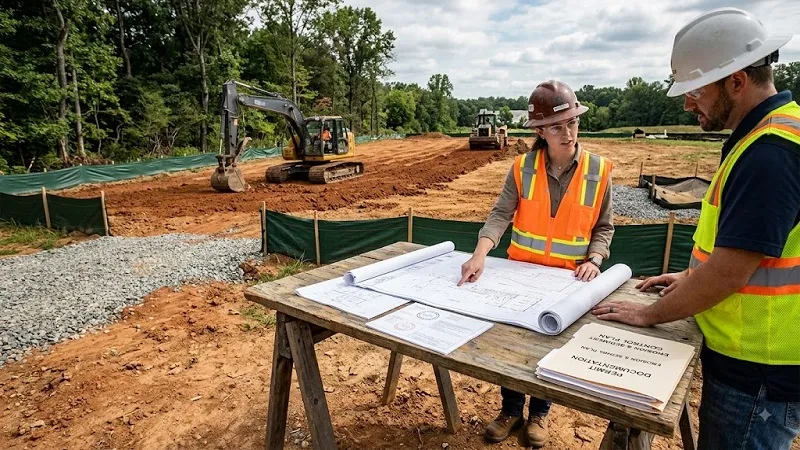
Land Disturbance Permit: Fast, Compliant Approval
Getting a construction project off the ground starts long before the foundation is poured. If your plans involve clearing trees, leveling ground, or excavating for utilities, you will need permission from your local government to alter the terrain. Securing your land disturbance permit quickly is a priority to keep your entire timeline intact. This formal authorization ensures your site preparation complies with environmental regulations, specifically regarding soil erosion and stormwater runoff. Without it, your project simply cannot move forward.
You are ready to break ground on your new project. The designs are finalized, the budget is set, and the contractors are lined up. But before anyone moves a single shovel of dirt, you must submit the right paperwork. Getting this approval keeps your schedule on track and prevents costly stop-work orders. Local planning departments use this requirement to protect the surrounding environment. Understanding exactly what municipal reviewers look for will help you bypass common delays, avoid endless revisions, and get your site moving.
What Triggers the Need for a Permit?
Every municipality has different rules, but most follow similar environmental guidelines passed down from state and federal agencies. In many regions, disturbing more than 2,500 square feet of earth automatically requires an official review. This includes removing vegetation, leveling uneven ground, digging utility trenches, or even stockpiling dirt for future use. If your property sits near protected wetlands, steep slopes, or sensitive watersheds, the threshold for needing an application drops even lower.
The goal of the review process is straightforward. When you strip away natural vegetation, the exposed topsoil becomes highly vulnerable to rain and wind. Runoff can easily carry loose sediment into storm drains and nearby rivers. This accelerated erosion process clogs infrastructure and harms local water quality. Your application proves to the city that you have a solid strategy to contain that sediment safely on your property.
Before you fill out a single form, you need to research your specific local requirements. A quick visit to your county planning department website will tell you the exact square footage thresholds. You also need to determine if your project requires a general authorization or an area-wide authorization. Standard projects like home additions usually fall under a general classification. Larger commercial builds or projects near protected resources require a more extensive review. Knowing these details early prevents you from submitting the wrong forms and wasting valuable weeks in the queue.
Building a Bulletproof Application Package
A fast review depends entirely on the quality and completeness of your submission. Missing documents or incomplete site drawings are the most common reasons applications get rejected. You need to provide a very clear picture of how you will manage the site during active construction and after the heavy equipment leaves.
Your primary tool for compliance is the stormwater pollution prevention plan. This document details the exact physical methods you will use to control runoff. You will need to show reviewers exactly where you plan to install silt fences, sediment basins, and temporary ground cover. You must also include a maintenance schedule that outlines how often you will inspect and repair these protective measures after heavy rainstorms.
Alongside the environmental plans, your submission must include a detailed site map. This map should clearly outline the property boundaries and highlight the exact areas where the earth moving will occur. Reviewers want to see the exact distance between your active work zone and the property lines. They also look for designated construction entrances. A stabilized construction entrance usually consists of heavy crushed stone, and it prevents dump trucks from tracking mud onto public roads.
Depending on your location, you might also need to submit a formal Notice of Intent to your state environmental agency. This document gives the state a heads-up that a new earth-moving project is starting. Finally, expect to provide a realistic cost estimate for your erosion control materials. Many local governments ask for a performance bond or a letter of credit before issuing the final green light. This bond acts as an insurance policy. If you abandon the project, the city uses those funds to stabilize the soil and prevent environmental damage.
Proven Strategies to Accelerate Your Timeline
Waiting for municipal reviews can test the patience of any property owner. However, you have several proactive ways to speed up the process and avoid frustrating administrative loops. Incorporating strong commercial site development strategies from the very beginning will make a significant difference in your timeline.
First, schedule a pre-application meeting with your local planning office. Taking thirty minutes to discuss your project with city staff before submitting any paperwork gives you direct insight into what they expect. The reviewers can point out potential red flags in your initial concept. This allows you to make adjustments on your own terms before the formal review begins.
Second, bring in specialized help. Many regions require a certified responsible land disturber to oversee the project anyway. Hiring an experienced civil engineer or site planner early ensures your drawings meet all local technical standards. These professionals know exactly how to format the plans, which digital portals to use, and how to respond to reviewer comments quickly. They speak the same technical language as the municipal engineers, which eliminates confusion and accelerates approval.
Third, keep your design as simple as the site allows. You should limit the area of disturbed earth to only what is absolutely necessary for the build. Smaller footprints require fewer complex control measures. A tighter work zone makes the review process much simpler for the city engineers. If you can keep your total disturbed area just below the major regulatory thresholds, you might even qualify for an expedited review track.
Finally, double-check your entire package before hitting submit. In today’s digital environment, most applications go through online portals. A simple data entry error, like a misspelled street name or an incorrect parcel number, can kick your application out of the system entirely. By paying close attention to the details and delivering a comprehensive plan, you show the reviewing agencies that you are a responsible developer. That level of professionalism is the best way to secure your permit and get your construction project moving.