How to Design a Pet-Friendly Kitchen Without Sacrificing Style
The kitchen is often one of the busiest rooms in a home. Family members prepare meals, unpack groceries, gather around the counter, and move in and out throughout the day. In homes with pets, the kitchen may also become a feeding area, a water station, a storage space for treats, and a favourite place for animals to stay close to their owners.
Unfortunately, many kitchens are designed only with people in mind. Food bowls end up in walkways, bags of pet food take over valuable cabinet space, and curious animals can easily reach items that should be kept safely out of the way.
A pet-friendly kitchen does not need to look like a room designed entirely around animals. With thoughtful planning, homeowners can create a space that is attractive, organised, easy to clean, and comfortable for every member of the household.
Begin With Your Pet’s Daily Routine
Before choosing cabinets, countertops, or flooring, think about how your pet currently uses the kitchen.
Does your dog eat near the back door? Does your cat jump onto the counter to reach a sunny window? Are food bags stored in a corner because there is nowhere else to put them? Does the water bowl regularly get kicked or spilled?
Watching these routines can reveal which design changes would be most useful.
Consider questions such as:
- Where does your pet eat and drink?
- How much food needs to be stored?
- Does your pet enter the house through the kitchen?
- Are bowls currently placed in a busy walkway?
- Does your pet need to be separated from the cooking area?
- Which surfaces collect the most fur, mud, or water?
- Are cleaning supplies and human foods stored safely?
The best pet-friendly features solve real everyday problems rather than simply looking interesting in a photograph.
Create a Dedicated Feeding Station
Food and water bowls are often placed wherever there is available floor space. This can leave them directly in the path between the refrigerator, sink, and cooking area.
A dedicated feeding station gives bowls a permanent location and helps keep the rest of the kitchen organised.
The station could be built into the end of an island, placed beneath a low section of cabinetry, or positioned in a quiet corner away from the main cooking zone. A recessed area can prevent bowls from sliding into the walkway while still allowing pets to reach them comfortably.
The space should be large enough for the animal to stand and turn around without blocking cabinets or appliances. It should also be located somewhere that is easy to clean.
Removable bowls are usually more practical than permanently attached ones because they can be washed and refilled easily.
Include Convenient Food Storage
Pet food packaging is not always easy to store. Large bags can be heavy, difficult to seal, and inconvenient to move every day.
A deep drawer, pull-out cabinet, or sealed storage container can keep food fresh while reducing clutter. The storage area should be close to the feeding station but inaccessible to curious pets.
Treats, medications, grooming supplies, waste bags, and spare bowls can also be organised in a designated drawer or cabinet.
Labelled containers can be especially helpful in homes with several pets that eat different foods. They reduce the chance of confusion and make feeding routines faster.
Any pet medications should be stored separately and securely, particularly when children are also present in the home.
Select Easy-to-Clean Flooring
Kitchen floors already need to handle spills, crumbs, and frequent foot traffic. Pets add fur, muddy paws, water splashes, scratches, and occasional accidents to the list.
The best flooring choice will depend on the household, but durability and cleaning should be major considerations.
A pet-friendly floor should ideally be:
- Resistant to moisture
- Easy to sweep or vacuum
- Simple to mop
- Comfortable enough for pets to walk on
- Able to handle regular traffic
- Less likely to show every strand of fur
Very smooth floors may be difficult for older animals or pets with mobility problems. A surface with some texture can provide better grip and help animals move more confidently.
The floor colour also matters. Extremely dark or light flooring may show fur more clearly, while a slightly varied pattern can make everyday debris less noticeable between cleanings.
Choose Durable Cabinet Finishes
Pets may rub against lower cabinets, shake water onto them, or scratch the surface while waiting for food. For this reason, delicate finishes may not be the most practical choice.
Smooth, durable cabinet surfaces are generally easier to wipe clean. Handles should be comfortable to use but not so easy for an intelligent pet to pull open.
Homeowners with particularly curious animals may want to add child-safe cabinet latches to areas containing cleaning products, rubbish bins, or food.
Lower cabinets can also be designed with pet-related storage in mind. One cabinet might contain food, another could hold grooming supplies, and a pull-out section could conceal bowls when they are not being used.
The goal is to combine these features with the overall cabinet design so they feel like a natural part of the kitchen.
Protect Rubbish and Recycling Bins
An open rubbish bin can be extremely tempting to a hungry or curious pet. Besides creating a mess, it may expose the animal to bones, packaging, spoiled food, and other unsafe materials.
Built-in pull-out bins can keep rubbish and recycling out of sight while freeing up floor space. The cabinet should close securely and may need an additional latch when pets have learned how to open doors.
A covered freestanding bin can also work, but it should be stable enough that a larger animal cannot knock it over.
Place bins away from the pet feeding station. Keeping food storage, pet bowls, and household waste in separate areas makes the kitchen easier to organise and clean.
Keep Dangerous Items Out of Reach
Kitchen remodelling provides an opportunity to reconsider where potentially dangerous items are stored.
Cleaning products, sharp utensils, medications, alcohol, and certain foods should not be left where pets can reach them. Even items stored on a low shelf may be accessible to a determined dog or a cat that can open cabinet doors.
Use secure upper cabinets or latched lower cabinets for anything that could cause harm.
Electrical cords should also be organised so pets cannot chew or become tangled in them. Small appliances can be unplugged and stored when they are not being used.
During cooking, pan handles should be turned inward, and hot surfaces should never be left unattended around animals.
Plan a Safe Cooking Zone
Some pets like to remain beside their owners at all times. While this may be comforting, it can become dangerous when someone is carrying hot pans, using sharp knives, or opening a hot oven.
The kitchen layout should make it possible to keep pets away from the most active cooking areas without isolating them completely.
An island or peninsula can create a natural boundary between the cooking zone and the rest of the room. A pet bed can be placed on the safer side so the animal can stay nearby without standing underfoot.
In more open layouts, homeowners may consider a discreet gate that can be closed while cooking. Built-in gates can be designed to match the cabinetry and folded away when they are not needed.
Add a Comfortable Resting Area
Pets often choose the kitchen because they want to be near their owners, not because the floor is particularly comfortable.
A small resting area can give them a safe place to observe household activity. This might be a washable bed beneath a window, a cushioned bench at the edge of the room, or an open space beneath a counter.
The location should be away from the oven, refrigerator doors, and main walkway.
Avoid placing the bed directly beside food preparation surfaces, rubbish bins, or exterior doors that create cold draughts.
Washable covers are useful because kitchen smells, food crumbs, and pet hair can quickly collect on fabric.
Consider a Pet-Washing Area
Households with active dogs may benefit from a washing station near the kitchen, mudroom, or rear entrance.
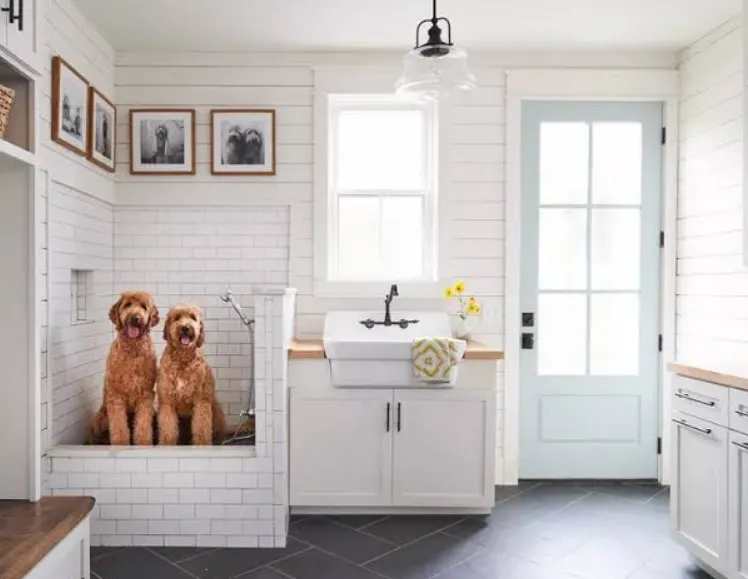
A compact pet shower can make it easier to clean muddy paws before the animal walks through the rest of the house. Features might include a handheld sprayer, non-slip surface, low entrance, and nearby storage for towels and shampoo.
A full washing station may not fit every kitchen. However, even a small area with hooks, towels, wipes, and paw-cleaning supplies can make a noticeable difference.
Placing this area near the entrance pets use most frequently can help contain dirt before it reaches the main living spaces.
Use Countertops That Suit Real Life
Countertops must handle food preparation, spills, cleaning products, and daily use. In a home with pets, they may also need to withstand paws, claws, or water shaken from a wet coat.
Durability and ease of cleaning should be considered alongside appearance.
A surface with subtle variation may hide small crumbs or marks better than a completely solid colour. Rounded countertop edges can also reduce the risk of injury when pets or people move quickly through the room.
Regardless of the material, countertops should be cleaned regularly and kept free from foods that may be harmful to animals.
Pet food should ideally be prepared in a designated area rather than directly beside food intended for people.
Improve Ventilation
Cooking odours, pet smells, moisture, and fur can make a busy kitchen feel less fresh.
A suitable ventilation system can help remove cooking smoke, steam, and strong odours. Windows and exterior doors may also improve airflow when weather permits.
Pet bedding, feeding mats, and washable rugs should be cleaned regularly. Sealed food containers and covered rubbish bins can also prevent odours from spreading.
When planning the remodel, consider surfaces and materials that do not trap smells easily. Smooth, washable finishes are usually easier to maintain than highly porous materials.
Make the Kitchen Work for People Too
A pet-friendly kitchen still needs to function well for the people who use it.
Do not sacrifice important preparation space or storage simply to add a pet feature. Instead, look for ways to integrate animal-friendly ideas into areas that might otherwise go unused.
The end of an island could hold a feeding station. A narrow cabinet might store food and treats. An empty section near the back door could become a cleaning area.
The kitchen should still provide comfortable walkways, sufficient countertop space, convenient appliance placement, and storage for cookware and groceries.
Homeowners considering major layout, cabinetry, flooring, or storage changes may benefit from consulting a company offering professional kitchen remodeling services in Springfield, MO. An experienced renovation team can help incorporate practical pet-friendly details without losing the style and functionality needed by the rest of the household.
Choose a Style That Will Last
Pet-friendly design does not require paw-print tiles, bone-shaped decorations, or animal-themed accessories.
A more timeless approach is to incorporate practical features while allowing the kitchen’s colours and materials to match the rest of the home.
Neutral cabinetry, durable flooring, simple hardware, and well-planned storage can create a polished appearance. Personality can then be added through washable rugs, artwork, bowls, and accessories that are easy to replace.
This approach allows the kitchen to continue working even when the household’s needs change.
Think About Older Pets
Animals’ needs often change as they age.
Older dogs may struggle on slippery flooring, while cats may find it harder to jump onto elevated surfaces. Raised bowls may be more comfortable for some animals, and wider walkways can make movement easier.
A low-entry washing station, textured floor, and easily accessible resting area can help senior pets remain comfortable.
Small changes made during a remodel may prevent the need for larger adjustments later.
Keep Cleaning Simple
A pet-friendly kitchen should reduce cleaning work rather than create more of it.
Washable feeding mats can contain water and food spills. Built-in storage can keep supplies off the floor. Smooth cabinet doors are easier to wipe than detailed surfaces, and durable flooring can handle frequent cleaning.
A vacuum or cleaning-tool cabinet near the kitchen may also be useful in homes where pet hair collects quickly.
The easier the kitchen is to maintain, the more likely it is to remain comfortable and welcoming for both people and animals.
Final Thoughts
Designing a pet-friendly kitchen is about understanding how every member of the household uses the space.
A dedicated feeding station, secure food storage, durable flooring, protected rubbish bins, and a comfortable resting area can solve many common problems. Features such as gates, washing stations, and non-slip surfaces can provide additional safety and convenience.
The most successful design will not make the kitchen feel like a pet facility. Instead, it will quietly include thoughtful details that support everyday routines while maintaining a clean and attractive appearance.
By balancing practicality, safety, and personal style, homeowners can create a kitchen where people can cook, gather, and relax while their pets remain comfortably close by.